
 Green tea · Roasted green
Hojicha
ほうじ茶, Hōjicha
8.2/10 editor's score
Japanese green tea roasted until it turns reddish-brown. Toasty and nutty, with little bitterness, and a favourite in the evening and with milk.
Based on published sources, not yet tasted.
What you need
At a glance
Japanese green tea roasted until it turns reddish-brown.
About Hojicha
What sources say about the taste
Sources describe hojicha as nutty, toasty and sweet with little or no bitterness, a little smoky with boiling water 1.
First sip
Lift the cup and smell before you drink.
Middle
Let it sit on the tongue for a moment.
Finish
What stays after you swallow.
Notes and intensities are an editor's summary of published tasting notes, not our own tasting.
Where it grows
History and culture
Hojicha was discovered in 1920 when a Kyoto merchant roasted unsold bancha 1.
Editor's score
Weighted across six criteria: flavour 30%, heritage 20%, availability 15%, value 15%, beginners 10%, versatility 10%.
Based on published sources, not yet tasted. Rates the tea style, not a brand. How we score →
Taste profile and caffeine+
Profile is an editor's summary of published tasting notes, not a lab measurement or our own tasting.
Caffeine
Our estimate. Roasting and the older leaf make it a gentle cup. Per 8 fl oz (240 ml) cup. Coffee and tea averages from Mayo ClinicC.
Harvest calendar+
Hojicha is usually made from later-season bancha 1. Tap a month or a season.
Cultivars and plant+
Camellia sinensis, from bancha, sencha or kukicha leaf 1.
How it is made+
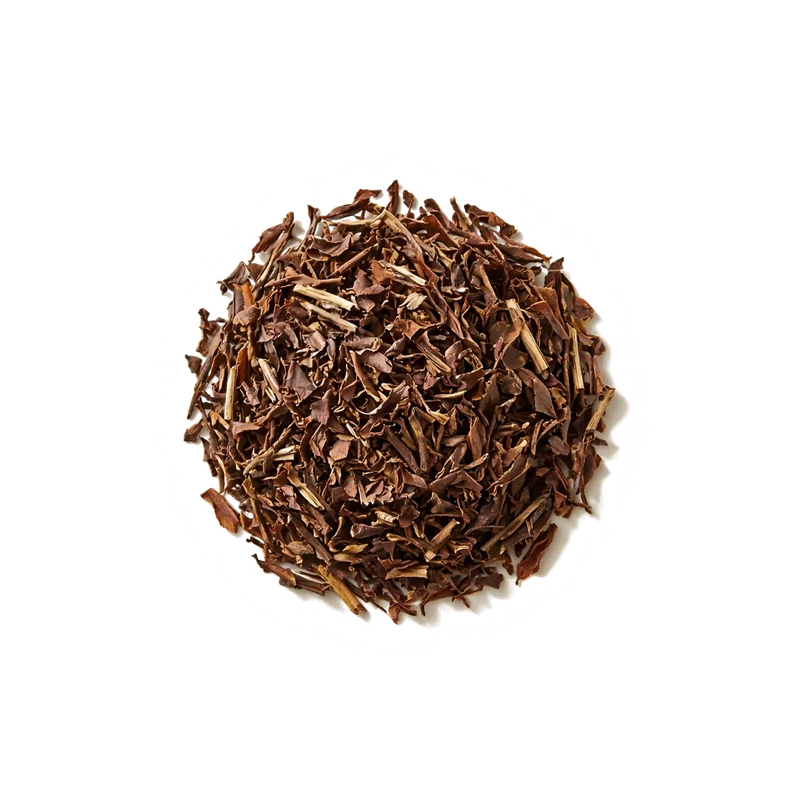
Dry leaf and liquor+
The colour swatch is an approximate guide, not a photograph.
Food pairings and storage+
Works well
- Grilled fish
- Rice dishes
- Sweet potato
- Dark chocolate
Best avoided
- Delicate citrus desserts
Pairings are general suggestions from the tea's style, not tested matches.
Storage
- Airtight, opaque container, away from light, heat and smells.
- Green tea fades fastest: aim to finish it within 3 to 6 months of opening.
- Unopened sealed packs can go in the fridge. Let them reach room temperature before opening.
Grades and fakes+
Leaf hojicha, twig hojicha (kuki) and powder are common styles 1.
How to spot a poor or fake one
- Smell it: it should be toasty, not burnt or stale.
- Powdered hojicha is for lattes and baking.
FAQ+
Is it low in caffeine?
It is usually gentle, as it is made from older leaf and roasted.
Can I use boiling water?
Yes, it tolerates it and gets a little smokier 1.
Sources
- Wikipedia, "Hōjicha". en.wikipedia.org/wiki/H%C5%8Djicha
- Mayo Clinic, "Caffeine content for coffee, tea, soda and more". www.mayoclinic.org/healthy-lifestyle/nutrition-and-healthy-eating/in-depth/caffeine/art-20049372
Scores and content updated 30 Oct 2026.