
 Green tea · Japan's everyday green
Sencha
煎茶
8.4/10 editor's score
Steamed green tea and Japan's most popular tea, about 80 percent of what the country produces. Shizuoka is its heartland.
Based on published sources, not yet tasted.
What you need
At a glance
Steamed green tea and Japan's most popular tea, about 80 percent of what the country produces.
About Sencha
What sources say about the taste
Sources describe a fresh, grassy flavour that changes with water temperature: cooler water gives a sweeter cup, hotter water a more bitter one 1.
First sip
Lift the cup and smell before you drink.
Middle
Let it sit on the tongue for a moment.
Finish
What stays after you swallow.
Notes and intensities are an editor's summary of published tasting notes, not our own tasting.
Editor's score
Weighted across six criteria: flavour 30%, heritage 20%, availability 15%, value 15%, beginners 10%, versatility 10%.
Based on published sources, not yet tasted. Rates the tea style, not a brand. How we score →
Taste profile and caffeine+
Profile is an editor's summary of published tasting notes, not a lab measurement or our own tasting.
Harvest calendar+
The first flush in spring gives the best sencha 1. Tap a month or a season.
How it is made+
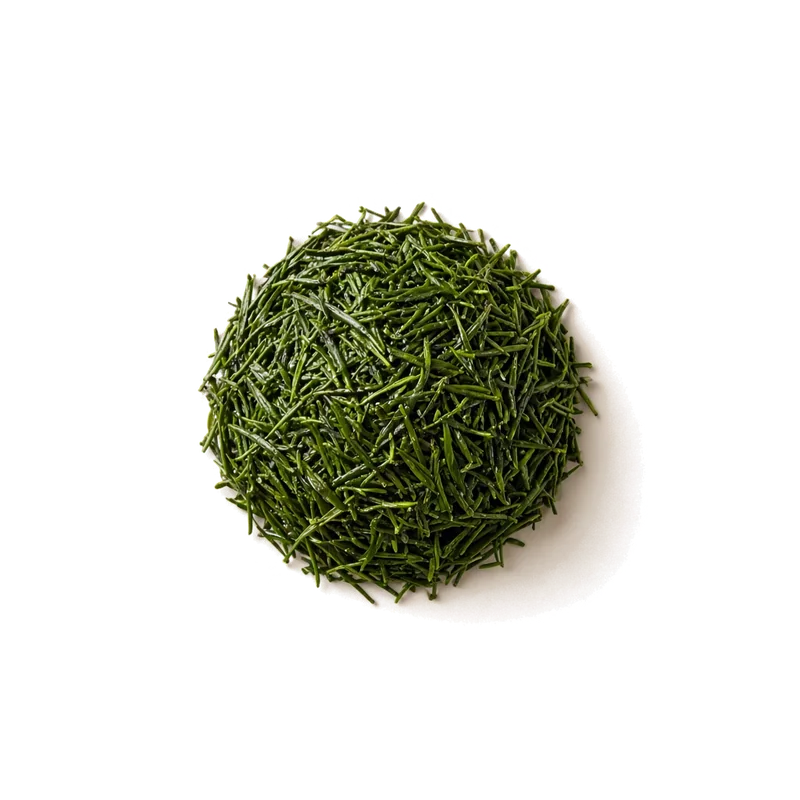
Spring leaf.
Stops oxidation and keeps the colour.
Shaped into needles.
Dried and sorted.
Dry leaf and liquor+
The colour swatch is an approximate guide, not a photograph.
Food pairings and storage+
Works well
- Sushi
- Rice crackers
- Tofu
- Wagashi
Best avoided
- Very sweet cakes
Pairings are general suggestions from the tea's style, not tested matches.
Storage
- Airtight, opaque container, away from light, heat and smells.
- Green tea fades fastest: aim to finish it within 3 to 6 months of opening.
- Unopened sealed packs can go in the fridge. Let them reach room temperature before opening.
Grades and fakes+
Deep-steamed (fukamushi) sencha is cloudier and richer; light-steamed is clearer 1.
How to spot a poor or fake one
- Look for the harvest date: sencha is best fresh.
- Store sealed and cool.
FAQ+
Why is my sencha bitter?
The water is probably too hot or the steep too long.
What is shincha?
The very first sencha of the year, sold in late spring.
Sources
- Wikipedia, "Sencha". en.wikipedia.org/wiki/Sencha
- Wikipedia, "Shizuoka Prefecture". en.wikipedia.org/wiki/Shizuoka_Prefecture
- Mayo Clinic, "Caffeine content for coffee, tea, soda and more". www.mayoclinic.org/healthy-lifestyle/nutrition-and-healthy-eating/in-depth/caffeine/art-20049372
Scores and content updated 30 Oct 2026.