
 Green tea · Pan-fired
Longjing (Dragon Well)
龙井, Xi Hu Longjing
8.6/10 editor's score
China's most famous green tea, from the hills around West Lake in Hangzhou. The leaves are pressed flat in hot woks, which gives a toasty, chestnut sweetness.
Based on published sources, not yet tasted.
What you need
At a glance
China's most famous green tea, from the hills around West Lake in Hangzhou.
About Longjing (Dragon Well)
What sources say about the taste
Sources describe a mellow, sweet cup with chestnut and toasted notes from pan-firing, plus fresh vegetal sweetness 1.
First sip
Lift the cup and smell before you drink.
Middle
Let it sit on the tongue for a moment.
Finish
What stays after you swallow.
Notes and intensities are an editor's summary of published tasting notes, not our own tasting.
Where it grows
- Region
- West Lake hills, Hangzhou, Zhejiang 1
- Protection
- Xi Hu Longjing is a protected origin in China 1
- Season
- Pre-Qingming picks before early April are the most prized 1
- Shape
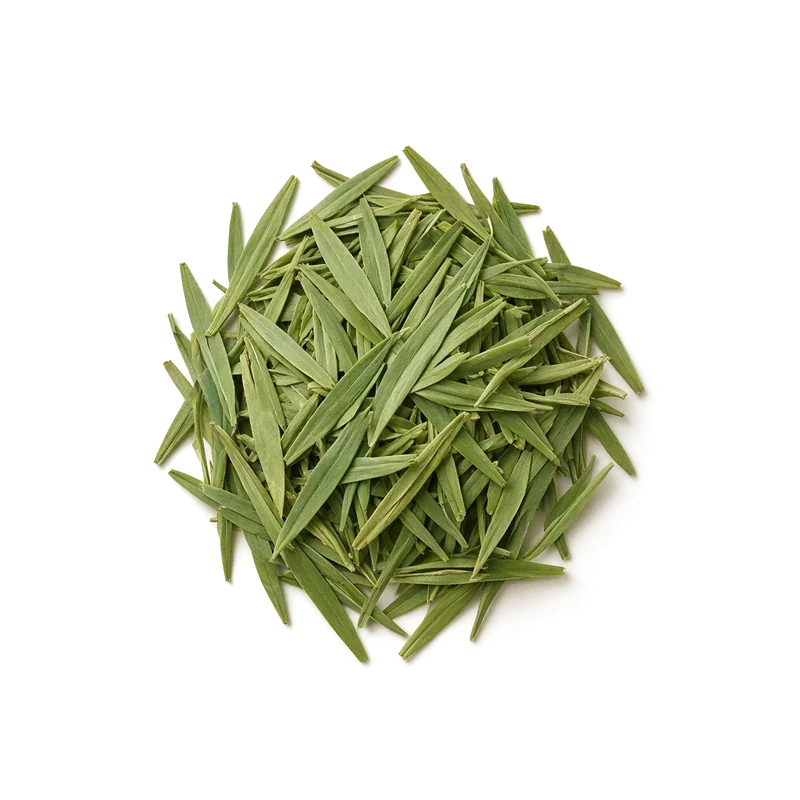
- Flat, smooth, sword-shaped leaves 1
More from West Lake, Hangzhou and China.
History and culture
Longjing has been praised since at least the Ming dynasty. Legend says the Qianlong Emperor visited the Hu Gong temple and named eighteen tea bushes there as imperial trees 1.
The name, Dragon Well, comes from a spring near the village of Longjing.
Editor's score
Weighted across six criteria: flavour 30%, heritage 20%, availability 15%, value 15%, beginners 10%, versatility 10%.
Based on published sources, not yet tasted. Rates the tea style, not a brand. How we score →
Taste profile and caffeine+
Profile is an editor's summary of published tasting notes, not a lab measurement or our own tasting.
Caffeine
Our estimate for a Western cup at moderate temperature. Per 8 fl oz (240 ml) cup. Coffee and tea averages from Mayo ClinicC.
Harvest calendar+
The famous lots are picked in a few weeks of early spring. Tap a month or a season.
Cultivars and plant+
Camellia sinensis var. sinensis. Older gardens use the local "Longjing qunti" seedling population, newer ones the cultivar Longjing 43 1.
How it is made+
One bud and one or two leaves.
Leaf rests to lose some moisture.
Pressed flat by hand in a hot wok.
Leaf rests to even out moisture.
Shaping into flat, smooth spears.
Dry leaf and liquor+
The colour swatch is an approximate guide, not a photograph.
Food pairings and storage+
Works well
- Steamed fish and prawns
- Light salads
- Mild cheeses
- Almond biscuits
Best avoided
- Heavy spice
- Rich chocolate
Pairings are general suggestions from the tea's style, not tested matches.
Storage
- Airtight, opaque container, away from light, heat and smells.
- Green tea fades fastest: aim to finish it within 3 to 6 months of opening.
- Unopened sealed packs can go in the fridge. Let them reach room temperature before opening.
Grades and fakes+
Grades run from special (tejí) down to lower numbered grades. Region matters most: West Lake core areas, then the wider Hangzhou and Zhejiang zones.
How to spot a poor or fake one
- A lot of "Longjing" is grown outside West Lake.
- Machine-made leaf is often more uniform and less nuanced.
- Smell: it should be fresh and nutty, not stale or smoky.
FAQ+
What does pre-Qingming mean?
Picked before the Qingming festival in early April, when buds are smallest and sweetest.
Why is it flat?
The leaves are pressed against the side of a hot wok while they dry.
Sources
- Wikipedia, "Longjing tea". en.wikipedia.org/wiki/Longjing_tea
- Wikipedia, "Chinese tea". en.wikipedia.org/wiki/Chinese_tea
- Mayo Clinic, "Caffeine content for coffee, tea, soda and more". www.mayoclinic.org/healthy-lifestyle/nutrition-and-healthy-eating/in-depth/caffeine/art-20049372
Scores and content updated 30 Oct 2026.