
 Oolong tea · Nitrogen-processed
GABA Oolong
Gabaron, 佳葉龍茶, Jia Ye Long cha
6.6/10 editor's score
An oolong given a special step: the leaves are kept in an oxygen-free nitrogen chamber, which raises their GABA content. Developed in Japan, now widely made in Taiwan.
Based on published sources, not yet tasted.
What you need
At a glance
An oolong given a special step: the leaves are kept in an oxygen-free nitrogen chamber, which raises their GABA content.
About GABA Oolong
What sources say about the taste
Sources describe the processing, not a fixed taste; styles vary by maker 1.
First sip
Lift the cup and smell before you drink.
Middle
Let it sit on the tongue for a moment.
Finish
What stays after you swallow.
Notes and intensities are an editor's summary of published tasting notes, not our own tasting.
Editor's score
Weighted across six criteria: flavour 30%, heritage 20%, availability 15%, value 15%, beginners 10%, versatility 10%.
Based on published sources, not yet tasted. Rates the tea style, not a brand. How we score →
Taste profile and caffeine+
Profile is an editor's summary of published tasting notes, not a lab measurement or our own tasting.
Harvest calendar+
Made from regular Taiwanese oolong seasons. Tap a month or a season.
Cultivars and plant+
Ordinary Camellia sinensis; the change comes from processing 1.
How it is made+
Fresh leaves.
Six to ten hours in an oxygen-free chamber 1.
Oolong-style.
Rolled into balls.
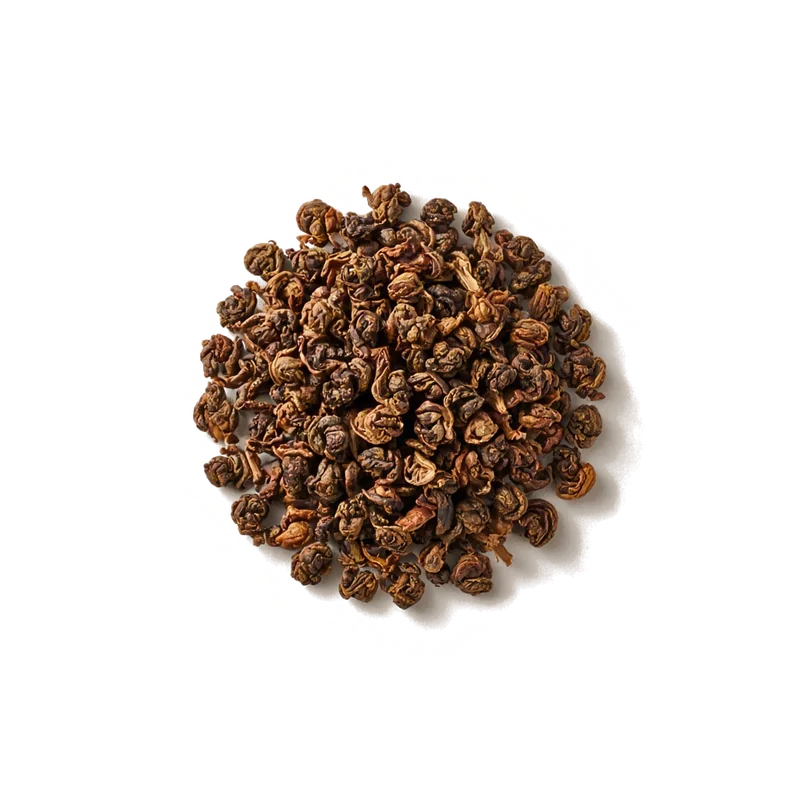
Dry leaf and liquor+
The colour swatch is an approximate guide, not a photograph.
Food pairings and storage+
Works well
- Fruit
- Nuts
- Light cakes
Best avoided
- Very spicy food
Pairings are general suggestions from the tea's style, not tested matches.
Storage
- Airtight, opaque tin or pouch, away from light, heat, moisture and strong smells.
- Keep it out of the fridge unless fully sealed, to avoid condensation.
- Most loose tea is at its best within a year. Note the harvest date on the tin.
Grades and fakes+
FAQ+
Does GABA tea help with stress?
A 2020 review said GABA may help stress and sleep but more research is needed 1.
Sources
- Wikipedia, "GABA tea". en.wikipedia.org/wiki/GABA_tea
- Mayo Clinic, "Caffeine content for coffee, tea, soda and more". www.mayoclinic.org/healthy-lifestyle/nutrition-and-healthy-eating/in-depth/caffeine/art-20049372
Scores and content updated 30 Oct 2026.