
 Pu-erh & dark tea · Ripe pu'er
Shou (Ripe) Pu'er
熟普洱, Shu Pu'er, ripe pu'er
7.9/10 editor's score
Pu'er ripened in months by a controlled pile fermentation developed in 1973. Dark, smooth and earthy, with almost no bitterness.
Based on published sources, not yet tasted.
What you need
At a glance
Pu'er ripened in months by a controlled pile fermentation developed in 1973.
About Shou (Ripe) Pu'er
What sources say about the taste
Sources say the ripened tea was thought to taste similar to raw pu'er aged naturally for 10 to 15 years 1.
First sip
Lift the cup and smell before you drink.
Middle
Let it sit on the tongue for a moment.
Finish
What stays after you swallow.
Notes and intensities are an editor's summary of published tasting notes, not our own tasting.
Editor's score
Weighted across six criteria: flavour 30%, heritage 20%, availability 15%, value 15%, beginners 10%, versatility 10%.
Based on published sources, not yet tasted. Rates the tea style, not a brand. How we score →
Taste profile and caffeine+
Profile is an editor's summary of published tasting notes, not a lab measurement or our own tasting.
Caffeine
Our estimate. Varies with leaf and steeping. Per 8 fl oz (240 ml) cup. Coffee and tea averages from Mayo ClinicC.
Harvest calendar+
The ripening, not the season, shapes shou pu'er most. Tap a month or a season.
Cultivars and plant+
Yunnan large-leaf Camellia sinensis var. assamica.
How it is made+
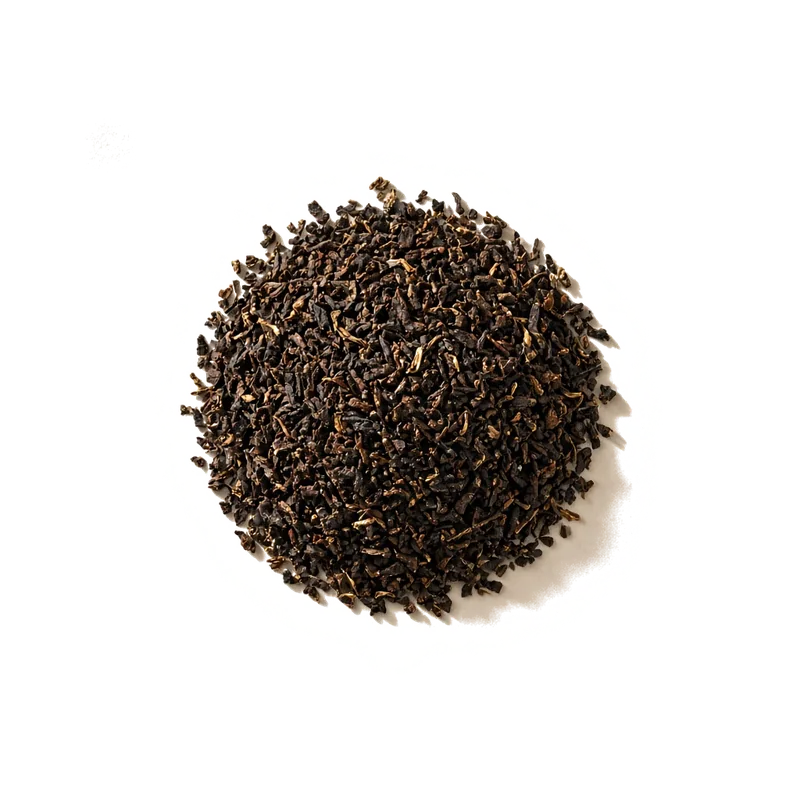
Dry leaf and liquor+
The colour swatch is an approximate guide, not a photograph.
Food pairings and storage+
Works well
- Dim sum
- Roast meats
- Dark chocolate
- Fried food
Best avoided
- Delicate desserts
Pairings are general suggestions from the tea's style, not tested matches.
Storage
- Store in a clean, odour-free place with some airflow and steady, moderate humidity.
- Keep cakes in their paper wrappers, away from sunlight and strong smells.
- Unlike most teas, many pu-erh and dark teas are kept for years and change as they age.
Grades and fakes+
Graded by leaf size: Gong Ting (tips) through to larger leaf.
How to spot a poor or fake one
- Young shou can smell of the pile: a rinse helps, and it fades with a year or two.
- Store away from strong smells.
Sources
- Wikipedia, "Pu'er tea". en.wikipedia.org/wiki/Pu%27er_tea
- Wikipedia, "Fermented tea". en.wikipedia.org/wiki/Fermented_tea
- Mayo Clinic, "Caffeine content for coffee, tea, soda and more". www.mayoclinic.org/healthy-lifestyle/nutrition-and-healthy-eating/in-depth/caffeine/art-20049372
Scores and content updated 30 Oct 2026.