
 White tea · Tribute eyebrow
Gong Mei
贡眉, Gongmei, Tribute Eyebrow
7.1/10 editor's score
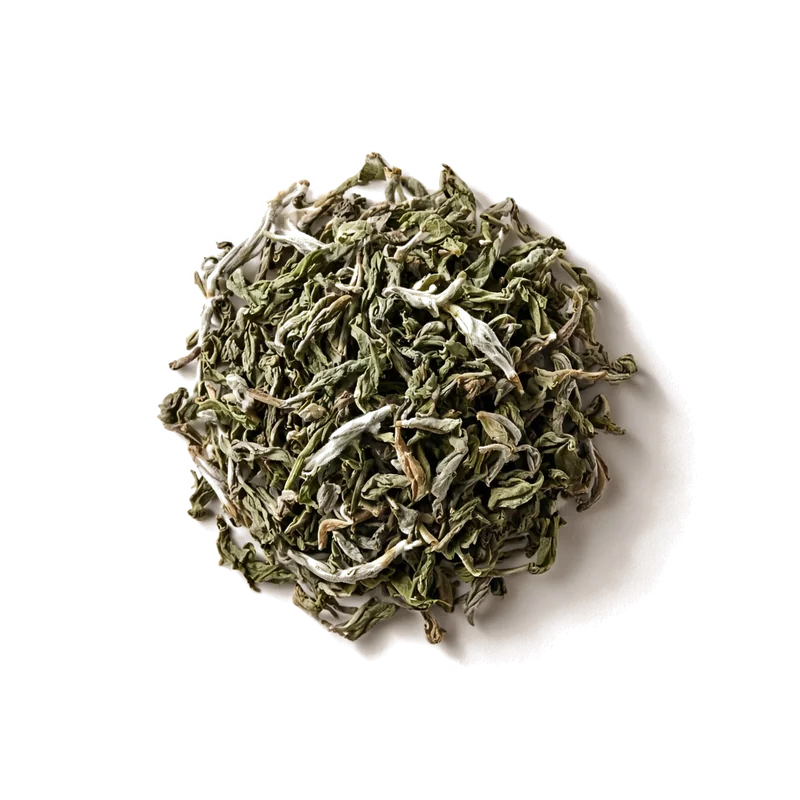
A Chinese white tea similar to Bai Mudan but with three to four leaves. White tea is produced mostly in Fujian.
Based on published sources, not yet tasted.
What you need
At a glance
A Chinese white tea similar to Bai Mudan but with three to four leaves.
About Gong Mei
What sources say about the taste
Sources describe its leaf grade; the taste depends on age and grade.
First sip
Lift the cup and smell before you drink.
Middle
Let it sit on the tongue for a moment.
Finish
What stays after you swallow.
Notes and intensities are an editor's summary of published tasting notes, not our own tasting.
Where it grows
- Leaf
- Like Bai Mudan, with three to four leaves 1
- Grade
- Third of four traditional grades 1
- Made
- Mostly in Fujian 1
- Type
- White tea 1
More from Various regions and China.
History and culture
Chinese white tea has four traditional grades: Baihao Yinzhen, Bai Mudan, Gongmei and Shoumei 1.
Editor's score
Weighted across six criteria: flavour 30%, heritage 20%, availability 15%, value 15%, beginners 10%, versatility 10%.
Based on published sources, not yet tasted. Rates the tea style, not a brand. How we score →
Taste profile and caffeine+
Profile is an editor's summary of published tasting notes, not a lab measurement or our own tasting.
Caffeine
Our estimate. Per 8 fl oz (240 ml) cup. Coffee and tea averages from Mayo ClinicC.
Harvest calendar+
Our general guide for Chinese white tea. Tap a month or a season.
Cultivars and plant+
Camellia sinensis grown mostly in Fujian 1.
Dry leaf and liquor+
The colour swatch is an approximate guide, not a photograph.
Food pairings and storage+
Works well
- Fruit
- Mild cheese
- Light cakes
Best avoided
- Heavy spice
Pairings are general suggestions from the tea's style, not tested matches.
Storage
- Airtight, opaque tin or pouch, away from light, heat, moisture and strong smells.
- Keep it out of the fridge unless fully sealed, to avoid condensation.
- Most loose tea is at its best within a year. Note the harvest date on the tin.
Grades and fakes+
Third of the four traditional grades 1.
How to spot a poor or fake one
- Region shown is an approximate area.
- Often good value.
FAQ+
Gong Mei or Bai Mudan?
Gong Mei has more leaf: three to four leaves rather than two 1.
Sources
- Wikipedia, "White tea". en.wikipedia.org/wiki/White_tea
- Mayo Clinic, "Caffeine content for coffee, tea, soda and more". www.mayoclinic.org/healthy-lifestyle/nutrition-and-healthy-eating/in-depth/caffeine/art-20049372
Scores and content updated 30 Oct 2026.