
 Herbal (tisane) · Coffee cherry tea
Cascara (Coffee Cherry Tea)
coffee cherry tea, qishr, hashara
6.8/10 editor's score
An infusion of the dried skins of the coffee fruit, originally from Yemen and Ethiopia, where similar drinks are called hashara and qishr. Unlike most herbal teas, it contains caffeine.
Tisane, not from Camellia sinensis. Based on published sources, not yet tasted.
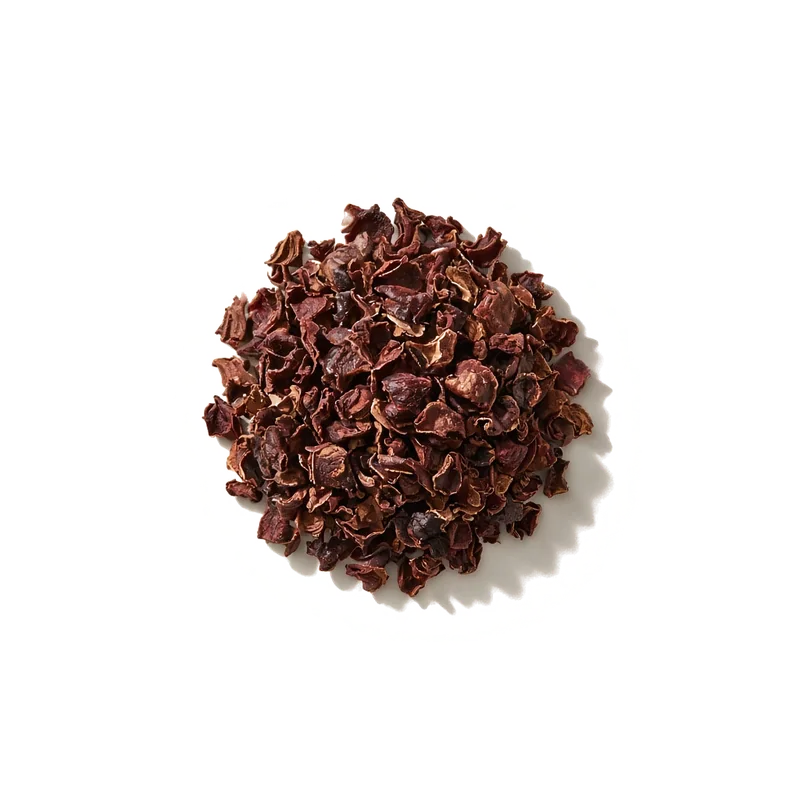
What you need
At a glance
An infusion of the dried skins of the coffee fruit, originally from Yemen and Ethiopia, where similar drinks are called hashara and qishr.
About Cascara (Coffee Cherry Tea)
What sources say about the taste
Sources say the coffee cherry husks have a floral aroma 1.
First sip
Lift the cup and smell before you drink.
Middle
Let it sit on the tongue for a moment.
Finish
What stays after you swallow.
Notes and intensities are an editor's summary of published tasting notes, not our own tasting.
Editor's score
Weighted across six criteria: flavour 30%, heritage 20%, availability 15%, value 15%, beginners 10%, versatility 10%.
Based on published sources, not yet tasted. Rates the plant, not a brand. How we score →
Taste profile and caffeine+
Profile is an editor's summary of published tasting notes, not a lab measurement or our own tasting.
Harvest calendar+
Our general guide; harvest months vary by country. Tap a month or a season.
The plant+
The dried fruit skin of the coffee plant 1.
How it is made+
Dry herb and infusion+
The colour swatch is an approximate guide, not a photograph.
Food pairings and storage+
Works well
- Pastries
- Fruit
- Honey
Best avoided
- Milk
Pairings are general suggestions from the tea's style, not tested matches.
Storage
- Airtight, opaque container, away from light, heat and moisture.
- Dried flowers and leaves lose aroma within about a year.
- Buy small amounts and keep away from spices and coffee, which taint the smell.
Quality and buying+
FAQ+
Does cascara have caffeine?
Yes. Sources say its caffeine is similar to black tea 1.
Sources
- Wikipedia, "Coffee cherry tea". en.wikipedia.org/wiki/Coffee_cherry_tea
- Mayo Clinic, "Caffeine content for coffee, tea, soda and more". www.mayoclinic.org/healthy-lifestyle/nutrition-and-healthy-eating/in-depth/caffeine/art-20049372
Scores and content updated 30 Oct 2026.